2014 — The Sea Through the Artist’s Eyes
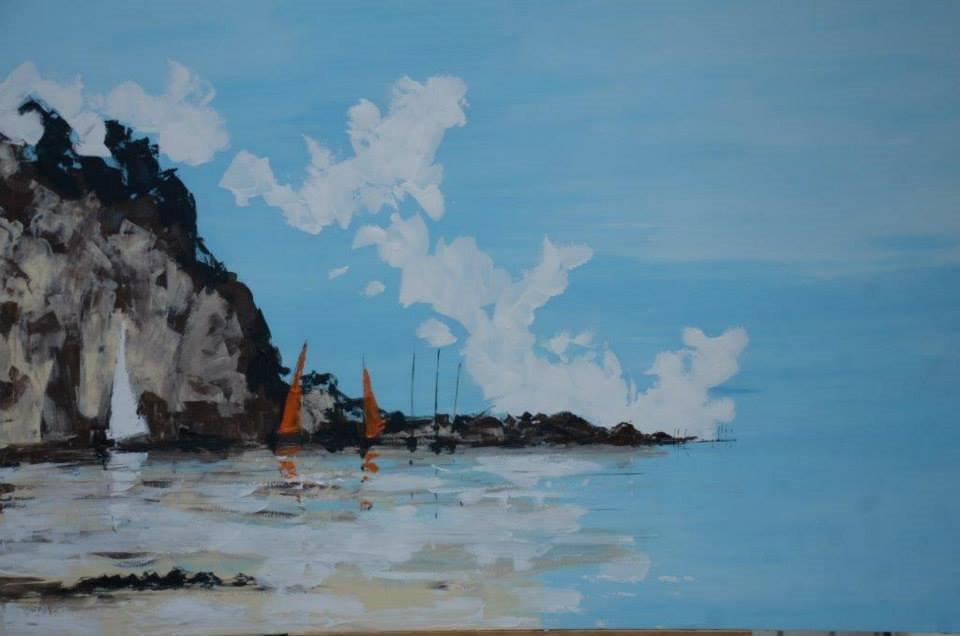
In Sergio Brambillasca’s painting, the sea takes shape through the interplay of light, colour and material. Rocky coastlines, boats and reflections on water are more than landscape elements: they form part of a pictorial construction in which gesture and surface play a defining role.
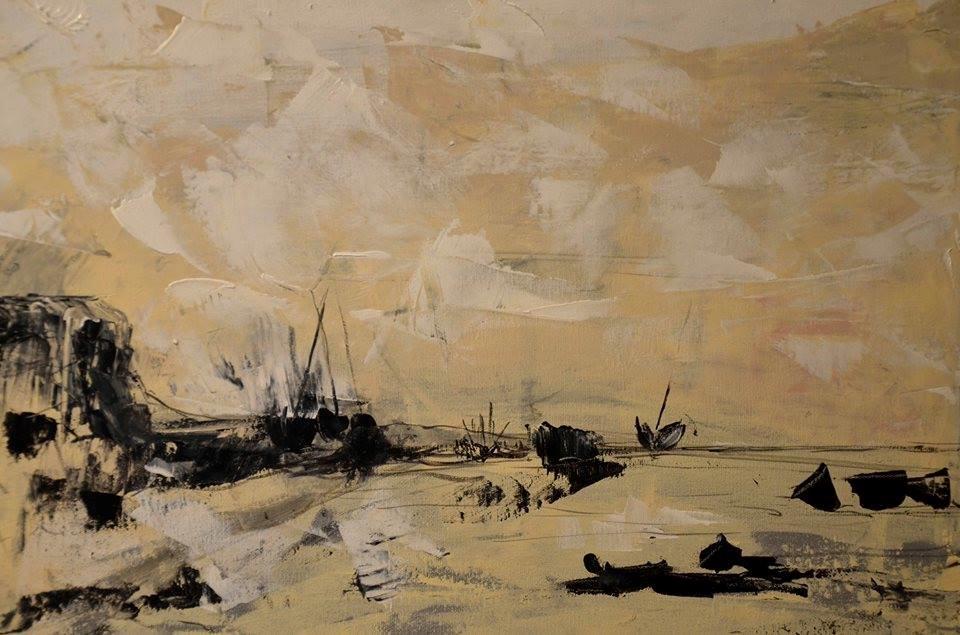
Broad expanses of blue meet powerful dark marks, while sails bring chromatic contrasts across the composition. Other works from the same period reveal a more essential approach, in which material and mark-making take precedence over the precise depiction of a subject.
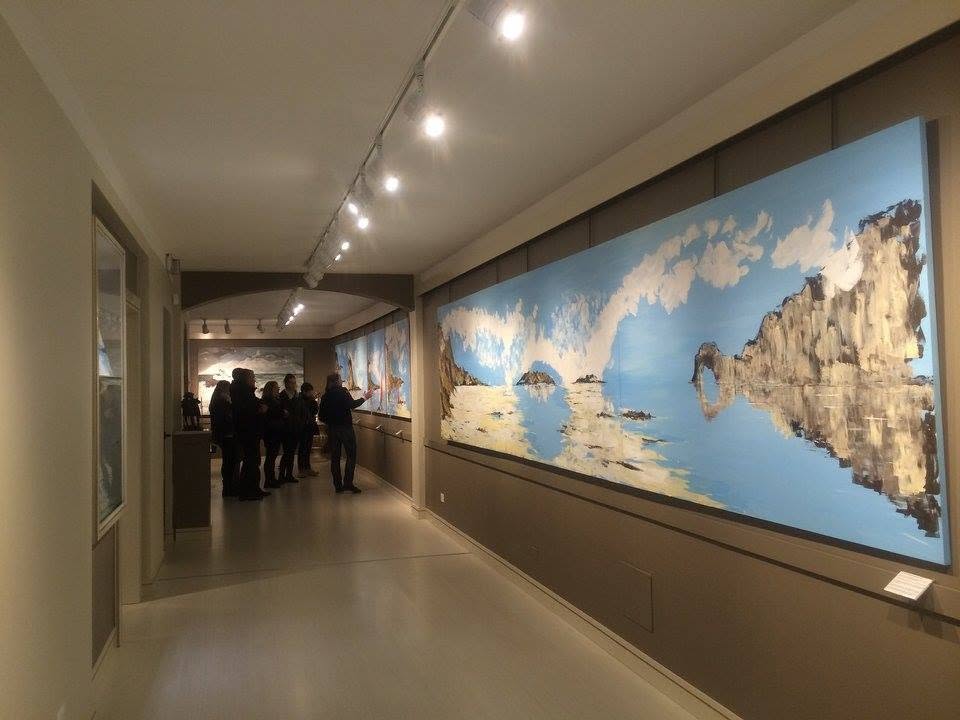
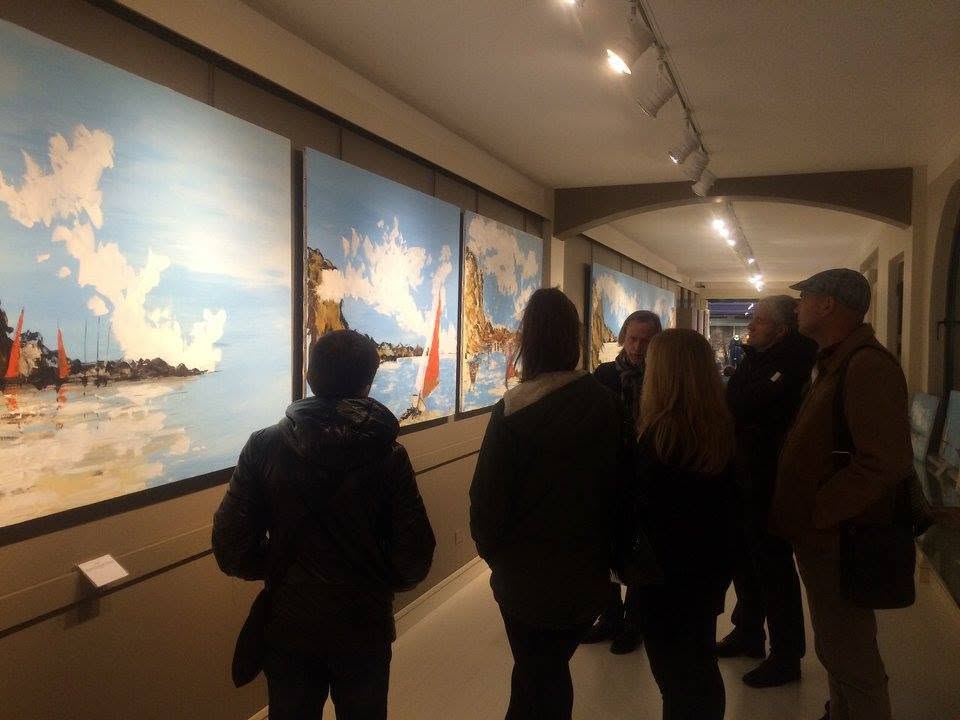
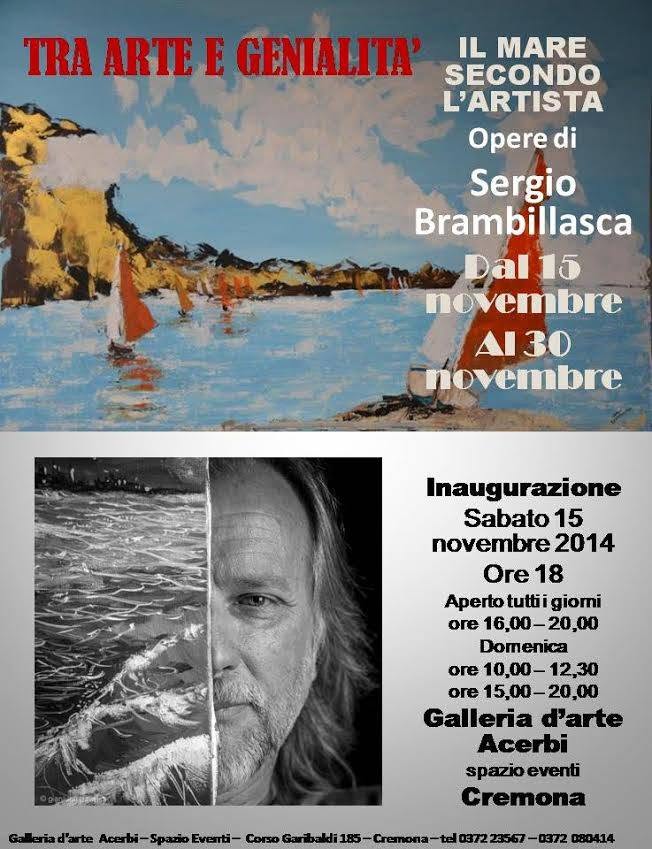
From 15 to 30 November 2014, this body of work was presented in “Il mare secondo l’artista” at the Galleria d’Arte Acerbi in Cremona. The exhibition documents a significant stage in Brambillasca’s development, with the sea as a field of pictorial research that would continue in subsequent years.
2015 — Between Ancient Texts and Conceptual Art
From 7 to 23 February 2015, Sergio Brambillasca presented his paintings at the La Fenice Art Gallery in Sanremo in the exhibition “Tra testi antichi e arte concettuale” (“Between Ancient Texts and Conceptual Art”), which opened on 7 February.
The works on display belonged to the pictorial research already developed in 2014: the sea, coastlines and boats offered opportunities to explore light, colour and material. Rather than marking the start of a separate body of work, this exhibition documented the continuation and public presentation of that research.
The original exhibition poster records this event at La Fenice, Via P. Z. A. Muccioli 5, Sanremo.
2015 — Torre delle Arti, Bellagio
In 2015, Brambillasca’s exploration of the sea was also presented at the Torre delle Arti in Bellagio. A photograph of the installation documents a large-scale seascape composed of several panels, extending the landscape across the exhibition space through light, coastlines and expanses of water.
This photographic evidence complements the Sanremo exhibition and confirms the continuity of his research into the sea. The precise title and dates of the Bellagio exhibition have not yet been documented.
2016 — Across the Sea, Milan
From 23 March to 23 April 2016, Sergio Brambillasca presented “Attraverso il mare” (“Across the Sea”) at Le Trottoir à la Darsena, Piazza XXIV Maggio 1, Milan. The opening took place on 23 March at 7:30 p.m.; the exhibition poster names Michelle Vasseur as curator.
The exhibition continued the exploration of the sea documented in the shows of 2014 and 2015. In the same year, Siediti e osserva also revealed the developing investigation of human profiles and the perimeter as a space of representation: two moments within one evolving artistic journey, rather than separate stories.
2016 — Sit and Observe
Sergio Brambillasca — 2016
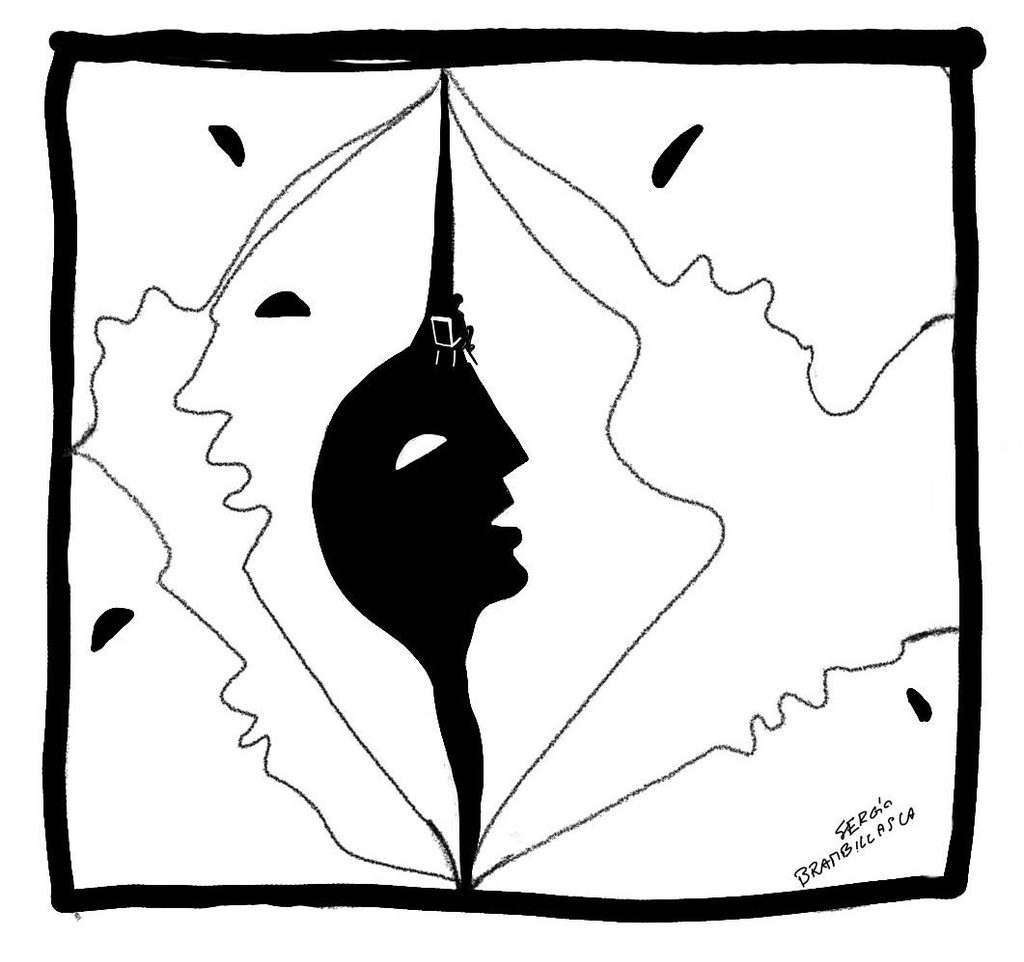
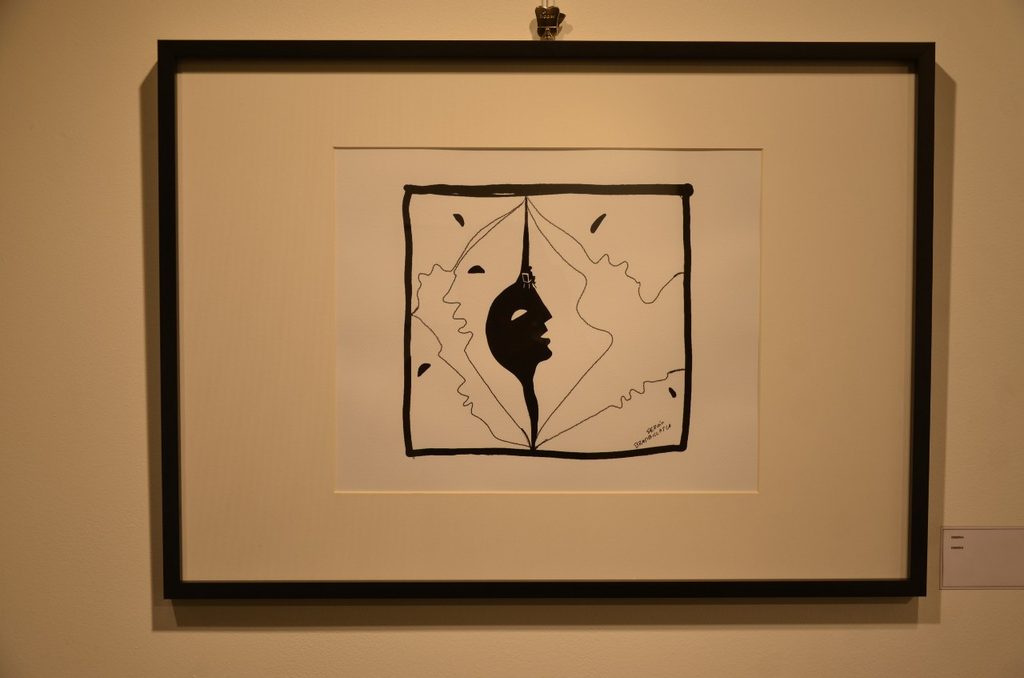
Siediti e osserva (“Sit and Observe”) marks a fundamental moment in the development of Sergio Brambillasca’s artistic language.
A perimeter defines the space of the artwork. Within it, a central human profile, formed by a black mass, enters into dialogue with other presences suggested through line and mark.
The rectangle is not merely a compositional frame: it becomes a symbolic theatre in which presence, absence and observation meet.
The title introduces an essential element: the viewer. Siediti e osserva is not simply an invitation to look. It calls for participation through the act of seeing, asking us to question what is visible and what remains concealed.
The work bears witness to a search in which the mark is not simply a graphic exercise but becomes a language. The perimeter defines the space; the profiles introduce human presence; the viewer completes the encounter.
These elements form a structure that continues to evolve in the artist’s subsequent work, through painting, sculpture and participatory projects.
The work does not merely invite observation: it asks viewers to recognise their own presence before it.
2017 — AS ART: Cover and Feature Article
In issue 0 of AS ART — Visual Art Magazine of Contemporary International, published in November–December 2017, Sergio Brambillasca was featured on the cover and in an article dedicated to his artistic work.
The cover image combines the artist’s face with a seascape and a human profile drawn in red. The publication documents the public appearance of this distinctive mark in 2017, making visible the connection between his exploration of the sea and his developing language of profiles.
2017 — Laurel
Sergio Brambillasca — 2017
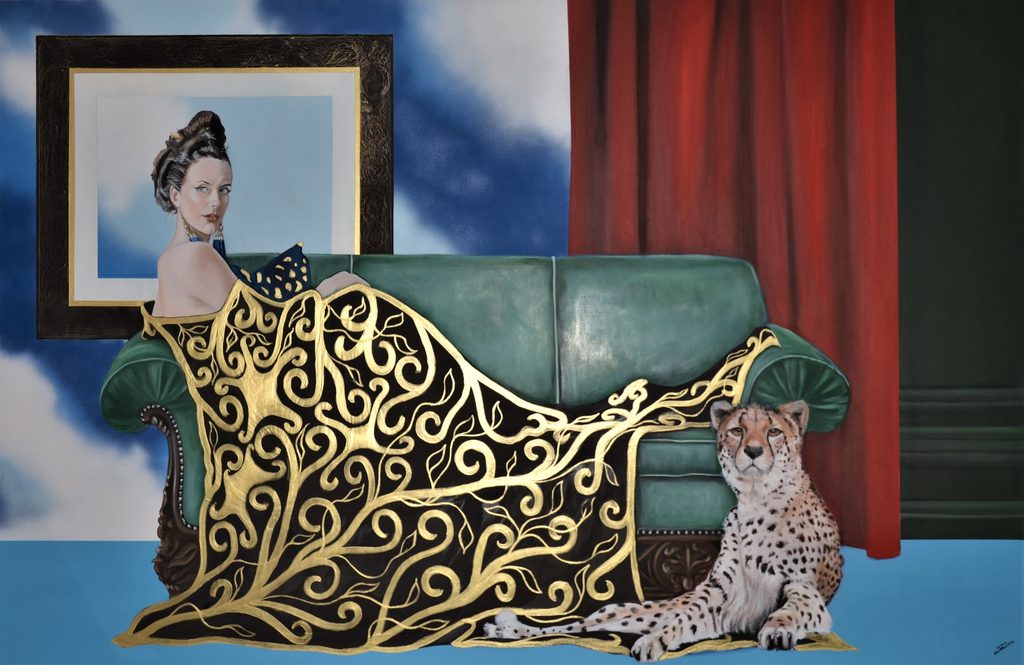
In Laurel, painting becomes theatre. A female figure occupies the centre of the composition, while the sofa, curtain, frame and animal presence create a stage-like setting where reality and representation meet.
The woman is not merely portrayed: she is the focal point around which the entire work is organised. The frame behind her introduces a second space within the composition, while the red curtain evokes the language of theatre, suggesting a scene opening before the viewer.
The arrangement of these elements is deliberate. The central figure and the relationship between spaces point to a recurring concern in Brambillasca’s work: the perimeter as a place of representation.
Compared with the essential visual language of Siediti e osserva, Laurel uses a different pictorial approach while retaining a fundamental principle: the artwork is a constructed space in which every presence contributes to its overall meaning.
Painting does not simply describe a scene. It determines relationships, hierarchies and the point towards which the gaze converges.
2018 — Mediterraneo: Image and Poetry
In 2018, through “Mediterraneo”, Sergio Brambillasca brought his visual language into dialogue with the poetry of Paolo Levi. Presented in Cremona, the project brought together 21 compositions in which drawing and poetry confront the tragedy of lives lost in the Mediterranean.
The human profile and the economy of the mark become ways of restoring presence and identity to people who risk being reduced to numbers in public discourse. The encounter between image and written word extends the artist’s research: rather than merely illustrating poetry, the two languages meet around memory and the responsibility of looking.
Paolo Levi — Original 2018 Testimony
This original recording documents the encounter between Sergio Brambillasca and Paolo Levi around Mediterraneo. It is a first-hand record of the artistic dialogue between drawing and poetry. Levi’s own words remain available in the audiovisual source; no unverified quotations have been attributed to him.
Exhibition documentation and video testimonies are available in the EVENTS section.
2018 — Same in Fate
Sergio Brambillasca — 2018
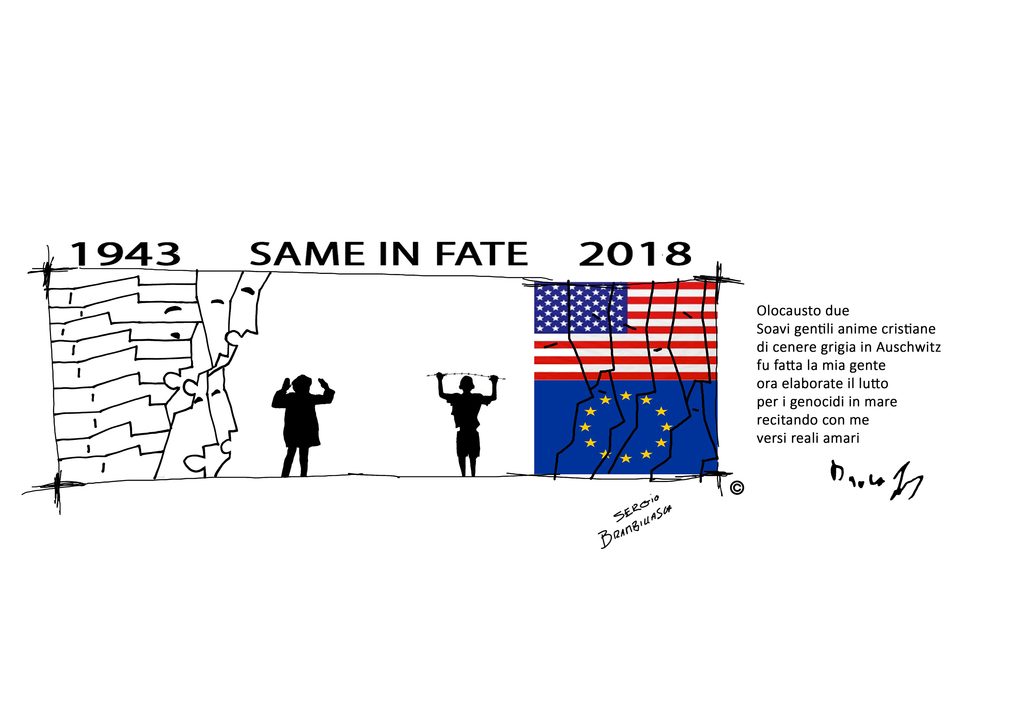
In Same in Fate, Sergio Brambillasca explores the relationship between human identity, historical memory and collective destiny.
The composition develops through his language of profiles, in which the human figure is not simply an individual representation but an expression of a shared condition. The perimeter defines the space of the artwork, while the marks and presences within it establish a relationship between past and present.
The memory of persecution and violence runs through the composition, confronting the viewer with the fragility of existence and the responsibility not to forget.
The economy of the mark does not diminish the complexity of the subject. Instead, it focuses attention on the relationships between the figures and the meaning of their presence.
In Same in Fate, Brambillasca’s visual language becomes a means of questioning history and humanity’s relationship with memory.
The past is not merely what happened. It is what continues to question us in the present.
2018 — Simple Numbers
Sergio Brambillasca — 2018
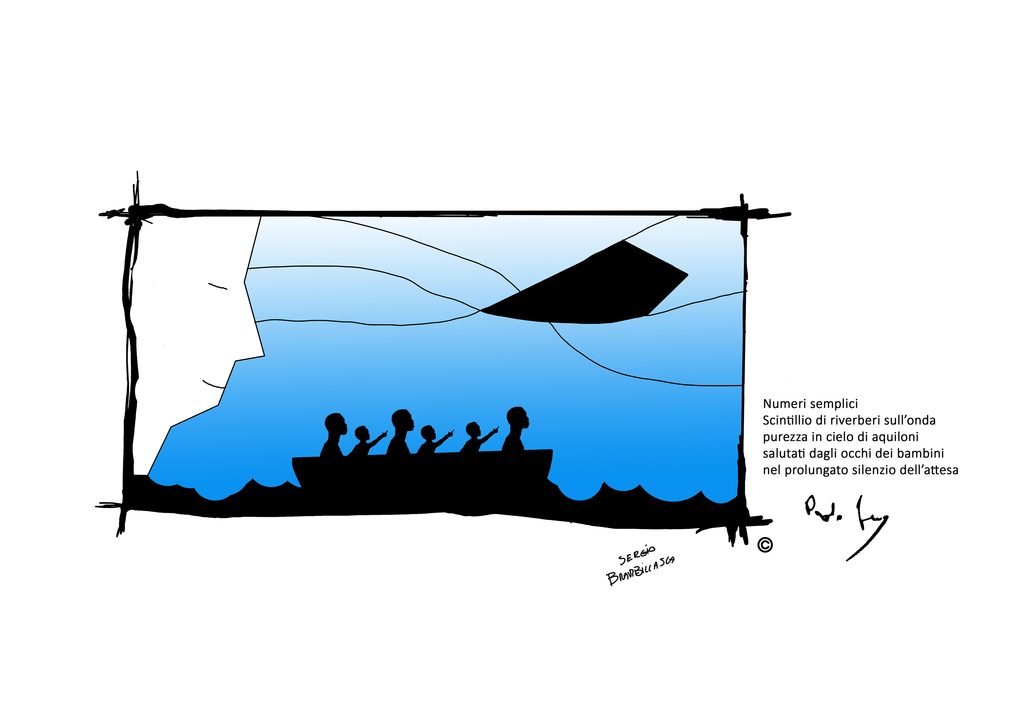
In Numeri semplici (“Simple Numbers”), Sergio Brambillasca addresses the relationship between individual identity and collective experience through a composition dominated by the sea and human presence.
A boat crosses the pictorial space, carrying figures whose essential forms evoke different lives, stories and destinies. The sea is not merely a landscape: it becomes a place of separation and passage, where human vulnerability confronts uncertainty.
The profiles and silhouettes belong to the artist’s recurring visual language. Their essential lines do not erase the identity of those depicted, but raise questions about how people are seen and regarded.
The title introduces a contradiction: what can be reduced to a number retains an irreducible human complexity. The work invites reflection on the distance between the figures used to report collective tragedies and the individual lives they represent.
Behind every number is a person. Behind every person is a story that cannot be reduced to a number.
MARILYN
The artwork that becomes time
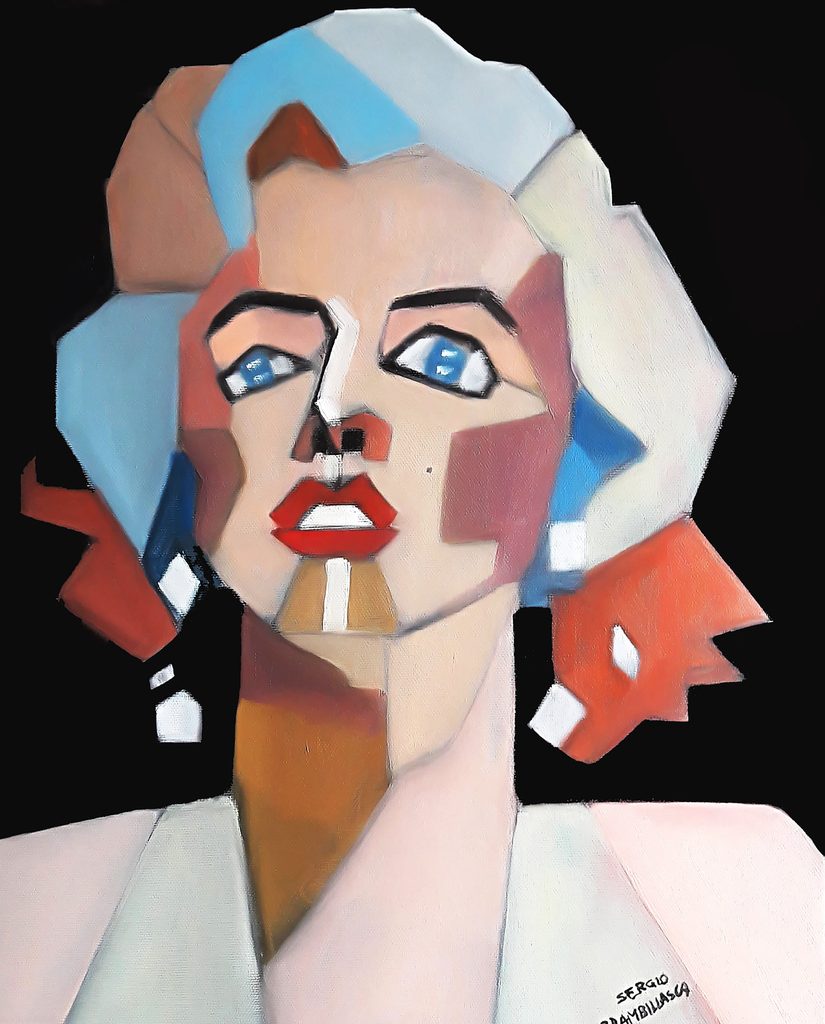
From project to exhibition (2019–2021). The first contacts with Berev regarding the exhibition devoted to Marilyn took place in late 2019 and early 2020. Despite the disruption of exhibition activities caused by the pandemic, the project went through more than a year of preparation before coming to fruition in 2021.
I wanted to portray Marilyn in an unconventional way, while preserving an image that would remain immediately recognizable.
Her face is broken down and reconstructed through shapes, lines and fields of colour: not a reproduction of the familiar image, but a new interpretation.
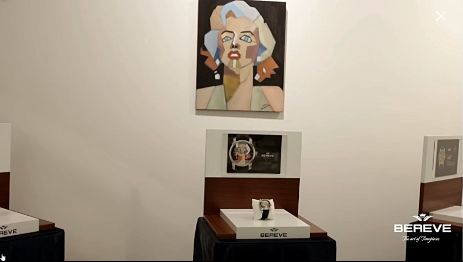
FROM CANVAS TO SPACE
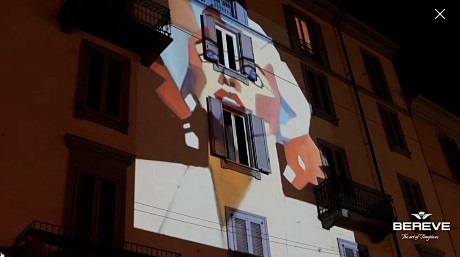
The image does not remain confined to the surface of the canvas.
During the exhibition, Marilyn is projected onto the façade of the building, taking on a public and monumental dimension.
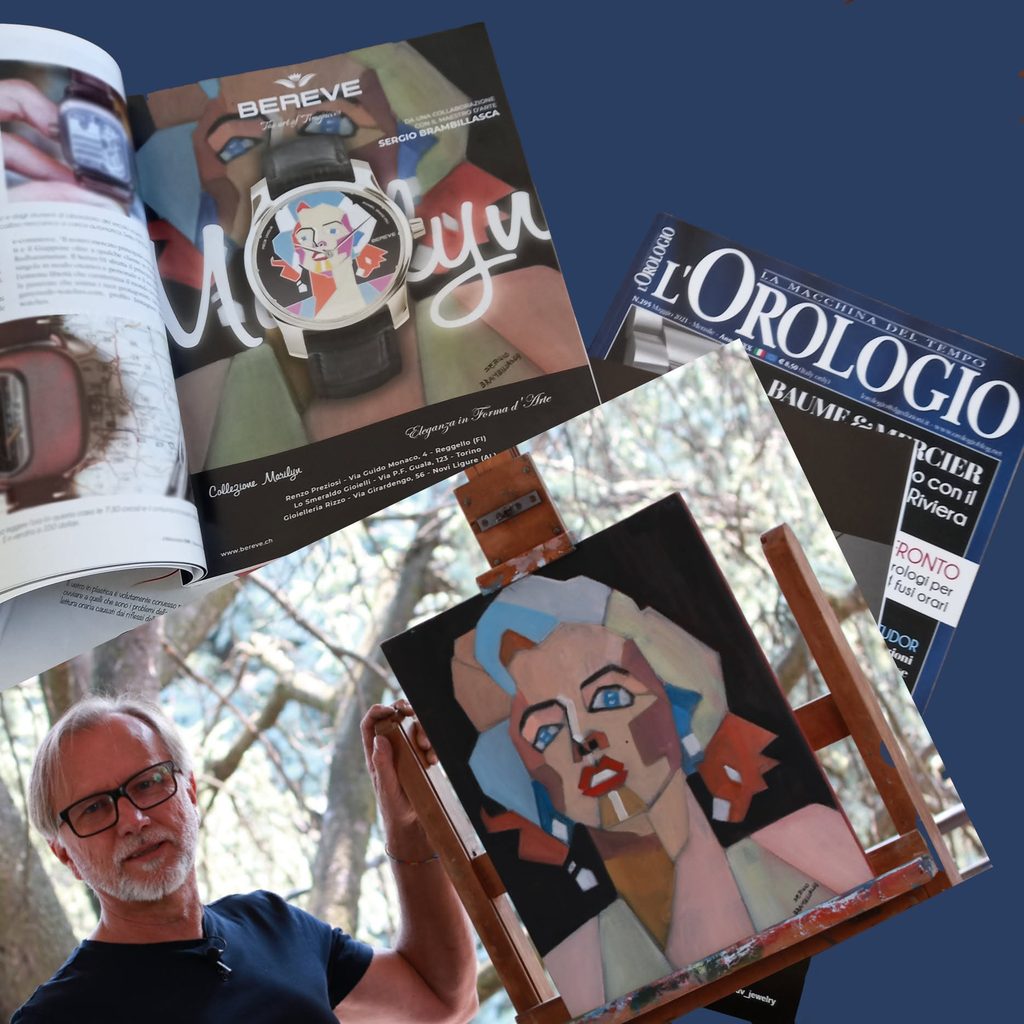
FROM ARTWORK TO OBJECT
The same image continues its journey.
Chosen for the dial of a watch, Marilyn enters a new space: no longer only canvas and image, but an artwork that accompanies the passage of time.
2022 — The Monsters
Sergio Brambillasca — 2022
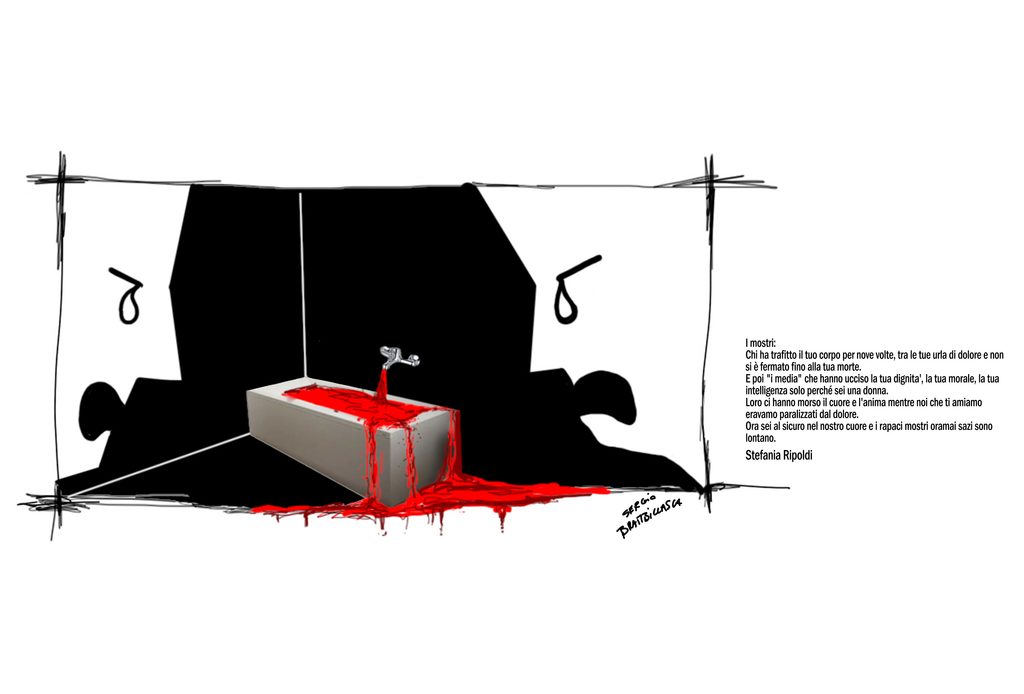
In this composition, Sergio Brambillasca addresses violence against women through an image in which the domestic space loses all sense of reassurance.
The bathtub, an object associated with everyday life and the most private dimension of existence, becomes the centre of an unsettling representation. The presence of blood introduces a rupture: what should evoke intimacy and protection becomes evidence of violence.
The work does not attempt to reconstruct a particular event. Instead, it focuses on traces, consequences and absence. It is precisely this absence that engages the viewer: the victim does not need to be explicitly depicted for her presence to be felt.
The contrast between the ordinariness of the setting and the gravity of what appears within it creates a visual tension that precedes any explanation. The image becomes a space of confrontation between what we see and what we are called upon to recognise.
Violence is not narrated through the act itself, but through what it leaves behind.